
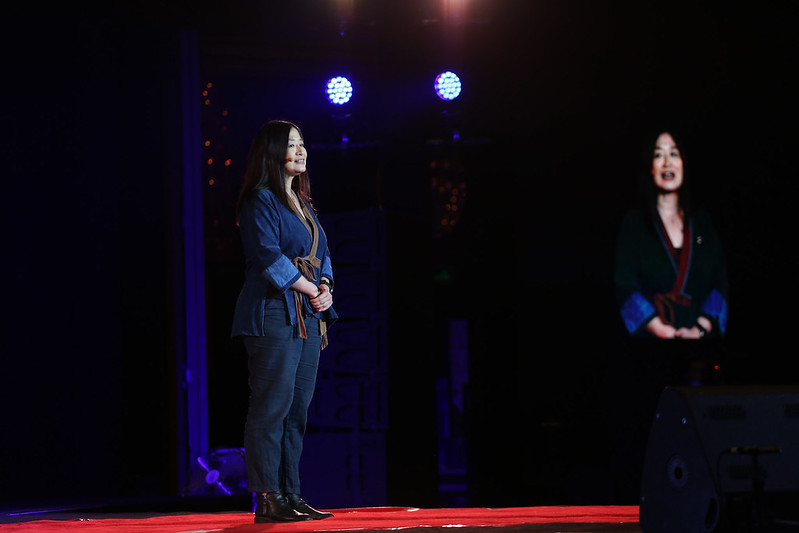
广州发展往哪走,谁说了算?
李文洁
东山口传来要拆迁的消息时,很多人才意识到,自己熟悉的街道与老建筑,可能很快会在城市扩张中消失。这样的事情,不只发生在广州,也出现在其他很多城市。面对这种与生活息息相关的议题,我们该如何参与?而这种参与,又真的能带来改变吗?
李文洁用自己的亲身经历和机构的实践告诉我们:只要人们愿意参与,改变是可能的,参与就是有力量的。
李文洁是 CECA 的总干事,她和团队长期致力于提升公众在环境议题上的参与度,研究方向涵盖环境影响评估、城市规划、法律政策等,重点关注珠三角和渤海湾的海洋与海岸生态问题。
在她看来,法律体系中最有意思的部分就是“公众参与”——不是由上而下的决策,而是由政府与市民社会一起,在法律所规定的框架下,以科学与理性的方式,平等对话,共同决定公共事务的走向。
Who has the final say in Guangzhou’s development?
Aster Li
When demolition news hit Dongshankou, it made people realize that the streets and buildings they knew so well might soon disappear in the name of urban development. This kind of situation isn’t unique to Guangzhou—it happens in cities everywhere.
But when our everyday environment is at stake, how do we get involved? And does our participation really matter? Aster Li uses her story—and the work of her organization—to show us: when people step up and engage, participation does matter. It has power.
As Director-General of CECA, Aster leads a team that works to increase public involvement by researching environmental impact assessments, urban planning, and related laws.
Their work focuses especially on the coastal and marine ecosystems of the Pearl River Delta and the Bohai Bay area.
What fascinates Aster most about the legal system is the idea of public participation.
She believes public affairs shouldn’t be dictated from the top down. Instead, government and civil society should sit at the table together, guided by legal rules, engaging in fair, science-based, rational discussions to shape the policies that govern our shared spaces.
 TEDxGuangzhou (TEDxXiguan) 2014-2023
留下评论