What Should Future Education Look Like?
First published 22 August 2017
People have different goals on education in different era, that's why we have various education modes. In ancient China people gathered together in old style private school to study, debating about Confucianism. Knowledge was transmitted in the most conventional way--through manual copy, handwriting or passing from mouth to mouth.
Progress in education has been made possible thanks to the advancement in science and technology which has enabled people to have diverse accesses, such as electric devices and online distance learning, to acquire knowledge. Presently, the booming AI has imposed new transformation to education, which invites a question worthy of our contemplation---will human intelligence be replaced by machines and programs in the future?
Under the existing test-oriented education, what comes out of it might be assembly line proudcts of this machinery industrial time. But can standarized testing help human beings winning over machines in this fast changing times?
▼
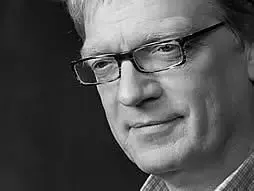
Ken Robinson
Where should future education look to? Ken Robinson brings us new thinking from a diverse-perspective in his speech---How to Escape from Education's Death Valley.
In his stirring and logical speech, Ken Robinson outlines three key principles on which human life flourishes.
Firstly, human beings are born different and diverse.Secondly, they embrace curiosity.Thirdly, they are innately creative.
In his opinion, the existing education culture is mainly focused on students' exams rather than teaching, obedience rather than the inspiration of curiosity.
Ken Robinson takes the Death Valley as an example, and pivots around a series of critital and profound topics, including how to get out of the educational "death valley" when current education culture goes against the three principles, and how to nurture younger generations with a climate of possibilities.
▼
Ken Robinson believes the point of eduction is to awaken and tap into people's creativity. He encourages more people to engage in education career and bring on this learning revolution.
In the end, he quotes from Benjamin Franklin:
"there are three sorts of people in the world: those who are immovable, people who don’t get, they don’t want to get it, they are going to do anything about it; there are people who are movable, people who see the need for change and are prepared to listen to it; there are people who move, people who make things happen."
Today's topic
Do you think art, humanities, physical education is equally important at the time of a rapidly expanding of technological development?
Education is not a monologue, and has no standard answer. The difference among individuals can stimulate sparks and creativity on different dimensions of education.
Written by | Lyra Dora
Translation by | Annie
Proofread by | Tracy
Layout by | Lyra
Visual design by | Jessie Zeng