How can we contribute to cut global food waste?
First published 30 September 2020
Banzz, Yuka Kinoshita, Keemi Kim, Stephanie Soo, …… If the above names do not ring a bring, don’t worry. You must have come across at least one of the visual stimulating cover images of boxes of fried chicken drumsticks, piles of black bean noodles or giant rolls of meat online.
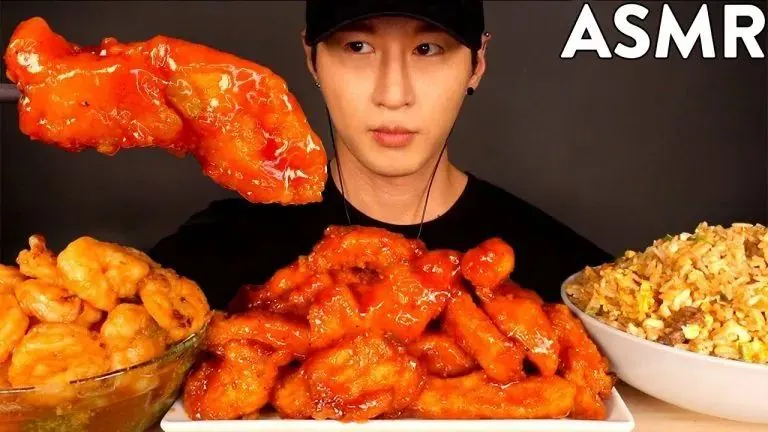
Pic. 01 Zach Choi's ASMR Mukbang Chinese Food
(Orange Chicken, Garlic Shrimp, Fried Rice)
Since 2015, a new genre of videos, known as mukbang, has taken over numerous video-sharing platforms. Mukbang means “broadcast eating”, a mash-up of the Korean words “muk-ja” for let’s eat and “bang-song” for broadcast. As extreme-eating videos that often require vloggers to consume thousands of calories all at once, the trend has sparked a controversy around food waste, when a few mukbang vloggers were discovered to leave an excessive volume of leftovers and spit out the food before swallowing. The criticisms towards the vloggers regain attention towards food security during a period when the COVID-19 crisis has exposed how vulnerable our food systems are.
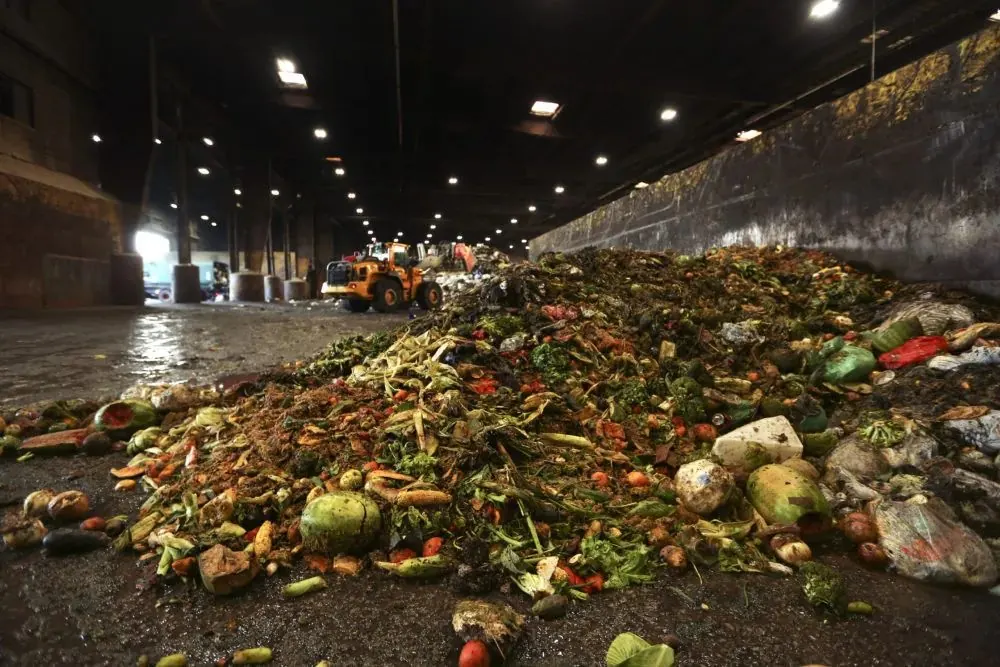
Photo credits: Stephen Groves/AP
According to the World Bank (2020), the pandemic together with extreme weather events such as floods and droughts will have an impact on food production in 23 countries. Globally, 690 million people have already been chronically food-insecure even before the crisis. Additionally, about one-third of food produced for human consumption that is around a total of 1.3 billion tonnes of food is lost or waster per year. (Gustavsson et al., 2011)
The global food waste scandale
Tristram Stuart | TEDSalon London
The movement against food waste has received growing interest from national and international organisations as well as policy-makers. Tristram Stuart started his fight against food waste since he was 15 years old and began writing a book to document the extent of the food waste problem on a global scale. He was struck by the excess of food produced, for example, the US produces twice as much food than it is needed to feed the population and how the food was wasted simply because they are of the wrong shapes or sizes.
According to the researches by Cecere, Mancinelli and Mazzanti (2014) and Secondi, Principato and Laureti (2015), individuals living in urban areas produce more food waste. Indeed, overpackaging, the convenience of supermarkets and the lack of awareness about the amount of food wasted tend to make us forget the severity of the problem. When it comes to sustainability issues, they can easily catch people off guard — where do we start? Unlike many hobbies, such as photography or golf, that require an initial investment in purchasing equipment, combatting food waste can be easily started in our daily routine.
Food waste fighter - if you can't finish it, call me
Kaiwei Ye and Sipin Lin | TEDxNYMU
Kaiwei Ye and Sipin Lin refer themselves as wanderers. In Taiwan, on average, a single person produces 96kg of food waste every year. The food wastage is categorized in two ways, either as food loss when processing or growing food or as food waste when consuming or transporting food.
Recognizing the severity of food waste problems in Taiwan, these two young fellows started a group called “food waste fighter - if you can’t finish it, call me” to save food by sharing and reusing the food that may otherwise end up in the trash cans. In this video, Ye and Lin encourage us to value our food by thinking about all the energy and resources consumed during the production.
Community farming - it's not about food
Josh Slotnick | TEDxUMontana
In 1997, Josh Slotnich co-founded Peas Farm that now grows thousands of pounds of fruits and vegetables for low-income families in Missoula. Sharing his experience in building community farms with local residents in Missoula, he discovered community farming is not only about food security, but also has the power to change people’s relationship with the landscape - people feel more connected and more in control of the lands beneath them.
If you are thinking about reducing the food waste in your household, reading Bae Johnson's Zero Waste Home: TheUltimate Guide to Simplifying Your Life would be a helpful start. As the founder of the zero waste movement, Bae and her family only produced a pint of trash every year since 2008. Her methodology is based on five concepts — “Refuse, Reduce, Reuse, Recycle, Rot and only in that order”.
- Refuse: Say no to what you don’t need
- Reduce: Focus on necessary purchases
- Reuse: Get your things a second life
- Recycle: Don’t throw away broken items immediately. Find ways to recycle them after following the previous steps.
- Rot: composite your own household waste
Zero Trash in Life
Tin Fong Yun | TEDxPetalingStreet
Zero waste lifestyle doesn’t only mean improving the environment, it also has a significant positive impact on their life such as having more savings, energy and time in pursuing their habits and passion, as Bae Johnson wrote in her book, Zero Waste Home: The Ultimate Guide to Simplifying Your Life, “Reducing also results in a simplified lifestyle that allows you to focus on quality versus quantity and experiences versus stuff.”
We have also compiled a list of activities you can start doing to reduce food waste:
Plan meals ahead and purchase small quantities of food. Although buying in bulk may be convenient, it easily leads to more food waste.
Save leftovers. You may already start saving excess food by storing them in the fridge. One good tip is to store them in a clear glass container, so you don't forget and end up tossing them.
Start pickling and fermentation! They are great ways to preserve your foods and add more flavors to your dishes.
Author : Lenette Lua(TEDxGuangzhou Content team)
Editor : Jimmy Tan, Phoebe Zhai
Typeset : Victon Lau
Proofread :Phoebe Zhai