Be(Longing)
首发于 2020 年 7 月 30 日
这篇文章只发布了英文版。
Rivers play a significant role in our life since the prehistorical time — from irrigation and transportation to electricity production. Human societies evolve alongside the rivers. Examining the history of Guangzhou, one can easily trace the presence of rivers seeping through. Located on the east bank of the Pearl River, adjacent to the South China Sea, Guangzhou’s history is documentation of migration and trades.
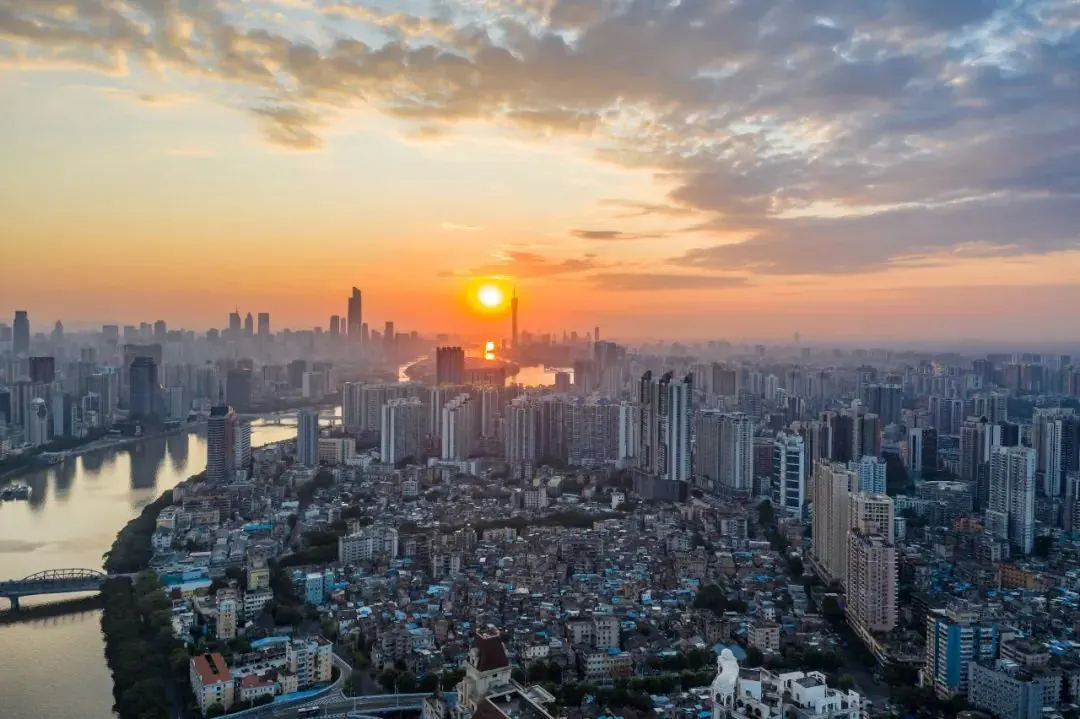
For some, Guangzhou is a distant fantasy. For others, it is a nostalgic dream. The economic growth of China has led to an influx of foreign workers, seeking work opportunities and different cultural experiences. Guangzhou is among one of the top cities in China with migrant workers. An estimated number between 30,000 and 100,000 foreign workers currently live here. For them, Guangzhou encompasses numerous opportunities and possibilities.
Guangzhou became the key trade centre in China in the 18th century. Due to its colonial past, Cantonese people, originating from the city of Guangzhou, had many opportunities in interacting with the western world. Many of them travelled and ended up staying in foreign lands.
What does it mean to belong to somewhere? The question seems like a distant ghost that haunts both the land and the people who are residing in Guangzhou now, and the ones who left there. In this article, we would like to address migration and identity to reflection upon the notion of home — how do we make a place home?
Who is this city for?
OluTimehin Adegbeye
There is a saying in Yoruba, “Èkó gb’olè, ó gb’ọ̀lẹ” meaning that Lagos will welcome anyone. However, the phrase became ever more ironic when the government announced plans to demolish every single waterfront settlement in Lagos in 2016, so Lagos can be “the new Dubai” that inspires big dreams. In this TED Talk, writer and activist OluTimehin Adegbeye exposes how poor people in Lagos are marginalised during gentrification.
When OluTimehin visited Lagos in November 2016, she was shocked by the ruins of schools, churches, shops and thousands of homes, and was even more upset to find out over 20 people’s deaths during government’s forced evictions. Who would predict the fishermen who were the first residents of the land would be the first target to be eradicated by the government? As the third migrant generation, OluTimehin believes that when her grandfather first mapped out the frontiers of Lagos, he believed in inclusivity and diversity and that “the only cities worth building -- indeed, the only futures worth dreaming of -- are those that include all of us, no matter who we are or how we make homes for ourselves.”
What is Home?
Pico Iyer
“Where do you come from?” — Writer Pico Iyer believes this simple question demands the most complicated answers.
As a travel enthusiast, Pico enjoys the active sensation when every perception is switched on. For him, movement signals many possibilities. Through movement, the way we think and dream about the world expands. Through the blending lens of cultures, beautiful things would emerge. For Pico, home is a future tense, a work in progress where you become yourself. Rather than the lands beneath us, it is where our soul resonates with the most.
Through years of travelling, Pico also realises stillness can be as important as movement. Through stillness, he recollects the bygones and reconnects with his mind. Stillness enables him to figure out where he is heading towards and the meaning of home when there is no home to go back to — home is a place where you stand.
Author : Lenette Lua(TEDxGuangzhou content team)
Editor : Jimmy Tan
Typesetting : Phoebe Zhai
Proofreading : Jimmy Tan